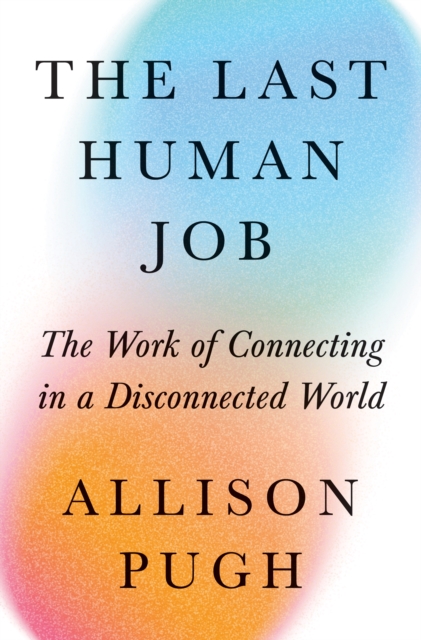
The Last Human Job
The Work of Connecting in a Disconnected World
(Author) Allison Pugh Allison J. Pugh"With artificial intelligence developing so rapidly that even some of the biggest names behind the advances are calling for pauses and increased regulation, discussions of the future of work in the age of AI have reached a new level of urgency. While certain less specialized jobs have long faced the threat of being replaced by more efficient and profitable machines (e.g., self-checkout lanes at grocery stores), many specialized jobs and jobs requiring high levels of human interaction have remained safe. Now, however, with enrollment in "virtual preschools" skyrocketing and thousands of mental health apps on the market, this threat has expanded to include even the educational, medical, and legal professions. But are efficiency and profitability the most important concerns in this transition, or is there something more essential at stake, something we risk overlooking and potentially losing? In The Last Human Job, Allison Pugh develops the concept of "connective labor" to capture a particular kind of work that plays a significant role in a wide range of professions-and which, she argues, cannot be accomplished by computers. Drawing on over 110 interviews and 300 hours of observation across a wide range of occupations, Pugh reveals connective labor as a particular kind of mutual recognition of each other's humanity, which is essential in all kinds of work relationships, whether teacher-student, coach-player, or doctor-patient. Connective labor depends upon the spontaneity of human contact and requires the physical expression of empathy toward another person; it can be learned through mentoring and encouragement, but it cannot be programmed without disturbing its fundamental human value. Without being opposed to technology, efficiency, or profit, Pugh engages with and pushes back against the arguments of technophiles and entrepreneurs, whose "utopian" visions, she argues, have lost sight of the fundamental, irreplaceable importance an achieved and shared emotional understanding has for the outcomes toward which we work and strive. By defining this form of work and carefully illustrating the significance it has both in the lives of individuals and for the "social intimacy" that binds our communities together, The Last Human Job is an impassioned plea for us to recognize, value, and protect a bastion of humanity in an increasingly automated and dehumanized world"--
Allison Pugh
Allison J. Pugh
Allison J. Pugh is a sociologist and author known for her work on the intersection of culture, consumption, and social inequality. She is a professor at the University of Virginia and has written extensively on topics such as work-life balance, parenting, and the effects of consumer culture on society.
One of Pugh's most notable works is "The Tumbleweed Society: Working and Caring in an Age of Insecurity," in which she explores how individuals navigate the challenges of balancing work and family in a rapidly changing economy. Her writing is characterized by a keen eye for detail and a nuanced understanding of the complexities of contemporary social issues.
Pugh's work has had a significant impact on the field of sociology, challenging conventional wisdom and shedding light on the ways in which social structures shape individual experiences. Her insightful analysis and engaging writing style have made her a respected voice in the field of sociology and beyond.
Other related
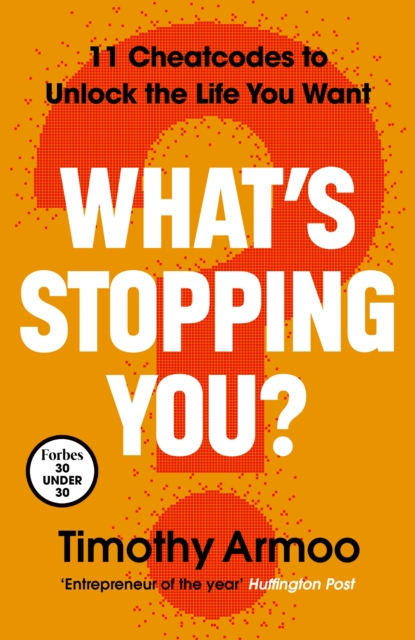
What’s Stopping You?
11 Cheatcodes to Unlock the Life You Want

Seven Myths About Money
And the Truth About Finding Financial Freedom

The Wolf of Investing
My Playbook for Making a Fortune on the Stock Market - the essential guide to building wealth from the Wolf of Wall Street