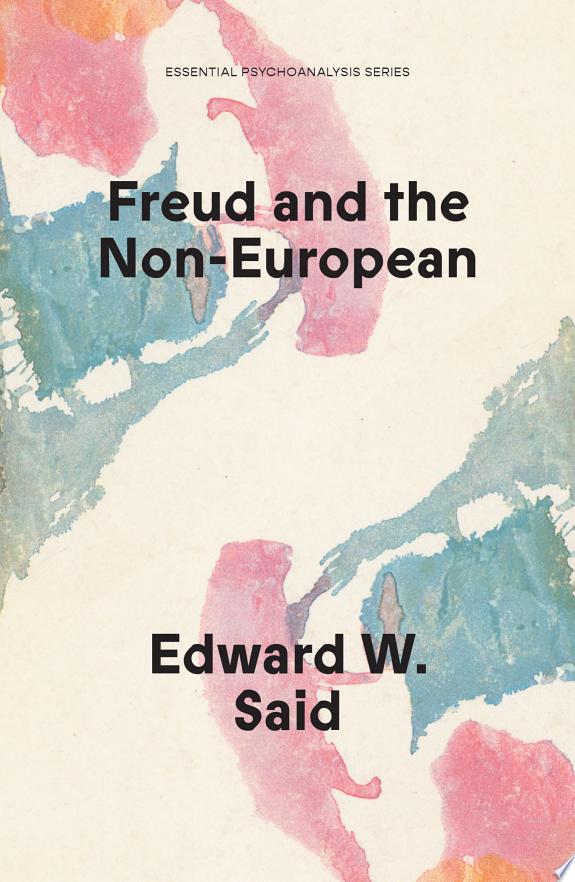
Freud and the Non-European
(Autor) Edward W. Said‘Said’s reading of Freud's reading of the history of the Jewish people is undeniably brilliant’ Times Literary Supplement In this influential lecture, Edward Said explores Freud’s foundational work Moses and Monotheism to rethink the relationship between identity, politics and psychoanalysis. The result is a study illuminating both Freud’s thinking and that of Said, on whom the great psychoanalyst was a formative influence. Was Moses Jewish or an Egyptian? The question undermines any simple ascription of identity, highlighting the limits of these categories. Said suggests that such an unresolved, nuanced sense of identity might, if embodied in political reality, form the basis for a new understanding between Jews and Palestinians. In contrast, Israel's relentless march towards an exclusively Jewish state denies any sense of a more complex, inclusive past. With an introduction by Christopher Bollas and a response by Jacqueline Rose.
Edward W. Said
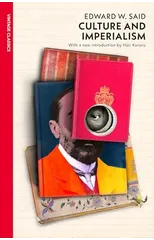
Edward W. Said (1935-2003) was a Palestinian-American literary theorist, critic, and scholar known for his groundbreaking work in post-colonial theory and cultural studies. His most notable works include "Orientalism" (1978), in which he critiques Western representations of the Middle East, and "Culture and Imperialism" (1993), which explores the relationship between culture and power in colonial contexts.
Said's writing style is characterized by its eloquence, depth of analysis, and commitment to challenging dominant narratives and structures of power. He was a pioneering figure in the field of post-colonial studies, and his work has had a profound impact on literary theory, cultural studies, and the understanding of colonialism and imperialism.
His most famous work, "Orientalism," remains a seminal text in the field, and continues to be widely studied and debated in academic circles. Said's contributions to literature and cultural studies have left a lasting legacy, inspiring generations of scholars to critically engage with issues of representation, identity, and power in the post-colonial world.
Other related


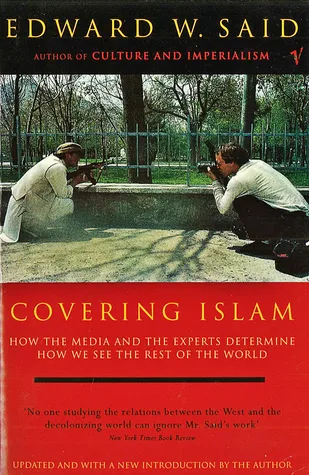
Covering Islam
How the Media and the Experts Determine How We See the Rest of the World (Fully Revised Edition)


Saint Petersburg
Sacrifice and Redemption in the City That Defied Hitler