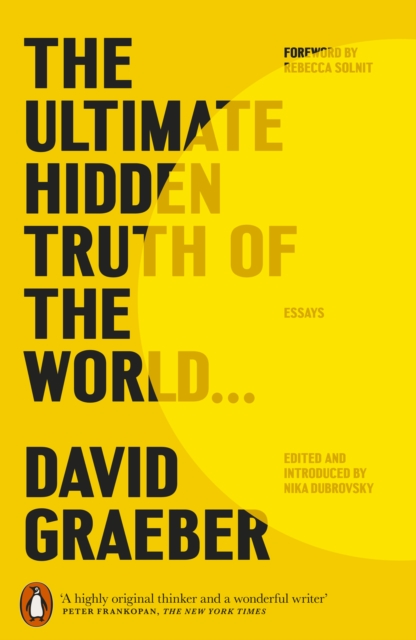
The Ultimate Hidden Truth of the World
(Autor) David Graeber'The ultimate hidden truth of the world is that it is something that we make, and could just as easily make differently,' wrote David Graeber, as well-known for his sharp, lively essays as he was for his iconic role in the Occupy movement and his paradigm-shifting tomes. There are converging political, economic, and ecological crises, and yet our politics is dominated by either business as usual or nostalgia for a mythical past. Thinking against the grain, Graeber was one of the few who dared to imagine a new understanding of the past and a liberatory vision of the future -- to imagine a social order based on humans' fundamental freedom. In essays published over three decades and ranging across the biggest issues of our time -- inequality, technology, the identity of 'the West,' democracy, art, power, anger, mutual aid, and protest -- he challenges the old assumptions about political life. A trenchant critic of the order of things, and driven by a bold imagination and a passionate commitment to human freedom, he offers hope that our world can be different. During a moment of daunting upheaval and pervasive despair, the incisive, entertaining, and urgent essays collected in The Ultimate Hidden Truth of the World . . . , edited and with an introduction by Nika Dubrovksy and with a foreword by Rebecca Solnit, make for essential and inspiring reading. They are a profound reminder of Graeber's enduring significance as an iconic, playful, necessary thinker.
David Graeber
David Graeber (1961-2020) was an American anthropologist, anarchist activist, and influential thinker. He is best known for his work in the field of social and political theory, particularly his critiques of capitalism and bureaucracy. Graeber's most notable works include "Debt: The First 5000 Years" and "Bullshit Jobs: A Theory." His writing style is marked by a blend of academic rigor and accessible language, making complex ideas understandable to a wide audience. Graeber's contributions to literature include challenging conventional wisdom on economic systems and work, and advocating for a more just and equitable society. His impact on the literary genre of social theory and political philosophy is profound, with his ideas continuing to inspire scholars, activists, and readers worldwide.
Other related


Debt, 10th Anniversary Edition
The First 5,000 Years, Updated and Expanded
Bullshit Jobs
The Rise of Pointless Work, and What We Can Do About It

What’s Stopping You?
11 Cheatcodes to Unlock the Life You Want

The Other Side of Change
Who We Become When Life Makes Other Plans
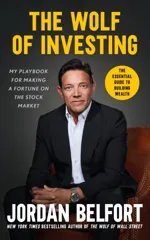
The Wolf of Investing
My Playbook for Making a Fortune on the Stock Market - the essential guide to building wealth from the Wolf of Wall Street