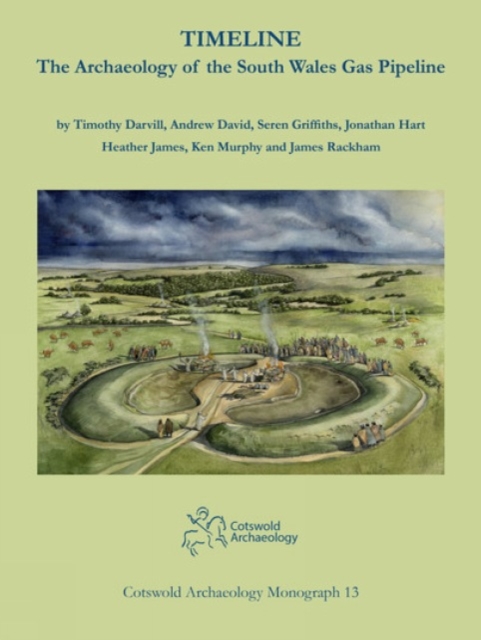
Timeline. The Archaeology of the South Wales Gas Pipeline
Excavations between Milford Haven, Pembrokeshire and Tirley, Gloucestershire : 13
(Autor) Timothy DarvillThe construction of a natural gas pipeline across southern Wales and into Herefordshire and Gloucestershire between 2005 and 2007 resulted in numerous archaeological discoveries, including sites of national significance. The project not only produced a wealth of new archaeological sites, it also generated important radiocarbon and environmental datasets for the region. The earliest activity is indicated by worked flint of Mesolithic (or earlier) date, with the earliest Neolithic communities represented by pits, evidence for occasional timber houses, and the discovery of a previously unknown henge. Beaker and Bronze Age settlement and burial remains were found too, including a rare copper halberd. The excavations also produced evidence for Early Bronze Age houses and numerous examples of burnt mounds. Other discoveries comprised much new evidence for Iron Age settlement (including some in areas of upland), Roman roads, crop-processing ovens, and ironworking. Rare evidence for the early medieval period was also found, along with the remains of later farmsteads and field systems. Moves towards industrialisation were reflected in the discovery of a brick kiln and charcoal-burning platforms.
Timothy Darvill
Timothy Darvill is a renowned British archaeologist known for his groundbreaking work in the study of prehistoric monuments. His most famous work, "Stonehenge: The Biography of a Landscape," delves into the history and significance of the iconic monument. Darvill's writing is scholarly yet accessible, making complex archaeological concepts understandable to a wider audience. His key contributions to literature include shedding new light on the mysteries of ancient civilizations.
Other related

Open-Air Rock-Art Conservation and Management
State of the Art and Future Perspectives