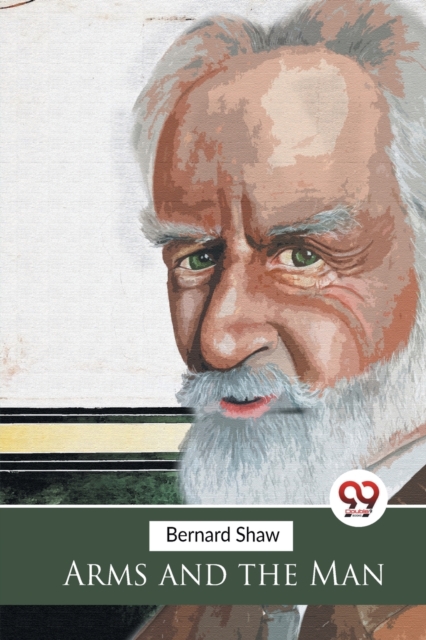
Arms and the Man
(Author) George Bernard ShawGeorge Bernard Shaw's three-act love comedy Arms and the Man was staged in 1894 and released a year later. The drama satirizes romantic notions of war and valor and is set in the Bulgarian home of the Petkoff family. In Raina Petkoff's bedroom, a battle-weary officer who is a Swiss mercenary serving in the Serbian army seeks safety and she agrees to hide him from the police. Raina initially mocks the intruder's cowardliness after hearing his straightforward description of the war, in which he refutes the heroics of her fiance Sergius, but eventually comes to value his honesty. After the war is done, the captain, Captain Bluntschli, makes a return. By the play's conclusion, Raina has engaged Bluntschli, who recently inherited a series of Swiss hotels, and Sergius has promised himself to maidservant Louka, whose fiancé, the manservant Nicola, voluntarily renounces his claim to her. The Serbo-Bulgarian War of 1885 is depicted in the drama. Young Bulgarian woman Raina Petkoff, the book's protagonist, is engaged to Sergius Sarnofff, one of the war's heroes whom she adores.
George Bernard Shaw
George Bernard Shaw was an Irish playwright, critic, and socialist known for his wit, humor, and social commentary. His most notable works include "Pygmalion," "Man and Superman," and "Saint Joan." Shaw's writing style was characterized by his sharp wit, satirical humor, and exploration of social issues such as class struggle, gender roles, and the role of the individual in society. He was a prominent figure in the literary genre of modern drama, challenging traditional conventions and pushing boundaries in his plays. Shaw's most famous work, "Pygmalion," has been adapted into the popular musical "My Fair Lady." His contributions to literature continue to be celebrated for their enduring relevance and thought-provoking themes.
Other related