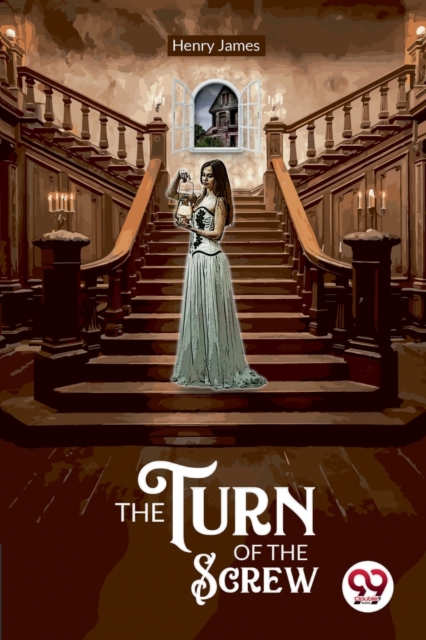
The Turn of the Screw
(Author) Henry JamesA manuscript written by the late governess of the unidentified narrator's sister is being read aloud. The text describes how she was hired by a guy who had taken on parental responsibility for his niece and nephew after their parents' passing. The governess's new employer, Flora's uncle, seems unconcerned with parenting the kids and leaves her in control entirely.She thinks the kids are aware that there are spirits in their house. Before her death, Miss Jessel, the previous governess, and another worker, Peter Quint, enjoyed a close friendship. Since Jessel and Quint spent a lot of time with Flora and Miles before they passed away, the governess believes that the two kids had been visited by ghosts.Flora denies seeing Miss Jessel, despite the governess's conviction that she has been conversing with her spirit. Miles, who finally speaks to her that night about his expulsion, is left behind when Mrs. Grose takes Flora away to her uncle. Quint's spirit appears to the governess at the window as she tries to view it. After telling Miles the ghost no longer influences him, she discovers that Miles had died in her arms.
Henry James
Henry James was an American novelist and critic known for his psychological realism and exploration of the complexities of human relationships. His most notable works include "The Portrait of a Lady," "The Turn of the Screw," and "The Wings of the Dove." James' writing style is characterized by intricate prose, detailed character development, and nuanced exploration of social conventions and moral dilemmas.
James is considered one of the most important figures in 19th-century American literature, often credited with shaping the modern novel through his innovative narrative techniques and deep psychological insight. His impact on the literary genre of the novel is profound, with many critics and writers citing him as a major influence on their work.
One of Henry James' most famous works is "The Turn of the Screw," a ghost story that explores the themes of innocence, corruption, and the supernatural. The novella is widely regarded as a masterpiece of psychological horror and has been adapted into various film and stage adaptations. Henry James' contributions to literature continue to be celebrated and studied for their profound insights into the human condition and the complexities of human experience.
Other related

The Complete Writings of Henry James on Art and Drama
Volume 1, Art
The Complete Writings of Henry James on Art and Drama
Volume 2, Drama