Bodas De Sangre
(Author) Federico Garcia LorcaBodas de Sangre meant the definitive success -both of public and critique- for playwright Federico Garcia Lorca. As a playwright he succeeded at staging the great issues of his poetry, his symbols, images and ideas, while creating a dramatic performance that captivated the audiences of Spain, Europe and the Americas. With this play Lorca achieved his most cherished ambition: to reach the masses, to impassionate with his plays vast and differently cultured audiences of diverse origins, nationalities and customs, without debasing himself to «commercial theater» commonplaces and vulgarity. Lorca succeeded with a different and suggestive play, deeply rooted in the classic tragedy concept and staged in modern times. A modern tragedy in Garcia Lorca's Andalusia, that in a similar way to Garcia Marquez's Macondo, or Faulkner's Yoknapatawpha, becomes a particular space, part myth part poetry, where reality intertwines with artistic creation. In this edition Borja Rodriguez Gutierrez analyzes in depth the tragic dimension of this Garcia Lorca play, where nature, blood, knives, death, the moon, and the overwhelming force of love, drag the main characters down into their unavoidable, tragic, destiny.
Federico Garcia Lorca
Federico Garcia Lorca was a Spanish poet, playwright, and theatre director known for his distinctive lyrical style and exploration of themes such as love, death, and passion. Some of his most notable works include "Blood Wedding," "Yerma," and "The House of Bernarda Alba," which are considered masterpieces of Spanish literature. Lorca's use of surreal imagery, musical language, and intense emotions set him apart as one of the most important figures of the Spanish literary movement known as the Generation of '27. His work continues to inspire and influence writers and artists around the world. Lorca's most famous work is perhaps "Romancero Gitano" (Gypsy Ballads), a collection of poems that showcases his talent for blending traditional Spanish forms with modernist sensibilities. Lorca's tragic death during the Spanish Civil War in 1936 further solidified his status as a literary icon.
Other related
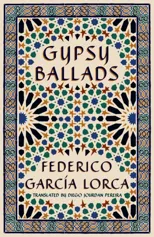
Gypsy Ballads
A New Translation of the Romancero gitano