Italian Medium Tanks
1939–45
(Author) Filippo CappellanoSeveral factors delayed and greatly hampered the development of an Italian medium and heavy tank during Rommel's Desert War in World War II. The first was the strategic stance of the country, focussed on a war against neighbouring countries such as France and Yugoslavia, and ill-prepared for a war in the Western Desert. Since these European countries bordered with Italy in mountainous areas, light tanks were preferred as these were deemed much more suitable for the narrow roads and bridges of the Alps. The failure to develop an effective operational plan for North Africa was another factor behind the failed development of an Italian medium tank, along with the lack of communication between the War Department and the Ministry of the Colonies, which not only had actual command over the Italian forces deployed in the Italian colonies of Libya and in Italian East Africa, but was also responsible for developing their defence plans. Furthermore, the development of the medium tank was hampered by the limited number of Italian industries, whose production was also heavily fragmented - hence the SPA-developed engines, the Fiat and Ansaldo hulls and armour, the Breda and army ordnance guns. All these factors delayed the development of the first prototype of an Italian medium tank - the M 11 - which would only appear in 1937 and did not enter production until 1939. Inspired by its British and French counterparts, the M 11 / 39 was a 11-ton medium tank chiefly intended for use as an infantry tank, with its main gun (a 37/40 gun) mounted in a casemate in the hull and its small turret armed only with two machine guns. Actual production was limited to only 100 samples, 76 of which were sent to Libya and the other 24 to Eastern Africa, as production of the turret-gun-armed M 13 had started in the meantime. In June 1940, when Italy entered the war, her armoured inventory numbered fewer than 1,500 light tanks (including the obsolete Fiat 3000) and the 100 newly built M 11 medium tanks, divided amongst three armoured divisions, three cavalry groups and several independent tank battalions. Unsurprisingly, without a tank school, the Italian armoured force lacked the necessary training and experience in the use of tanks and AFVs, and with the tanks lacking radio equipment, there was a widespread absence of tactical and technical knowledge which, along with the limited effectiveness and numbers of the available tanks, made the perfect recipe for the defeats to come.
Filippo Cappellano
Other related

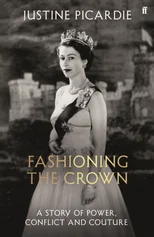
Fashioning the Crown
A Story of Power, Conflict and Couture