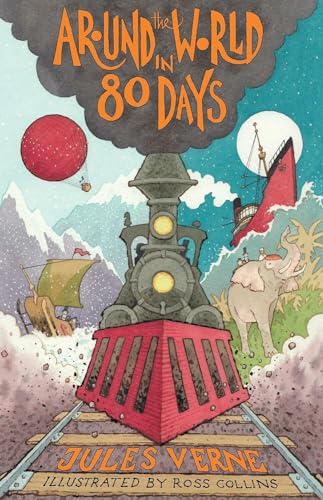
Around the World in Eighty Days
(Author) Jules VerneHaving learnt that a new railway in India has made it theoretically possible to travel all the way around the globe in no more than eighty days, Phileas Fogg, a wealthy and fastidious London gentleman, makes a wager of £20,000 with his Reform Club associates that he can achieve this hitherto unheard-of feat, and, accompanied by his French valet Jean Passepartout, boards a train for Dover the very same evening. Pursued on their epic journey by a Scotland Yard policeman who has mistaken Fogg for a bank robber, the intrepid voyagers face a race against time as they traverse a range of exotic and sometimes hazardous landscapes and make use of any and every mode of transport available to them - including elephants - in order to achieve their goal.A huge commercial success on first publication in 1872, Jules Verne's classic adventure story has been adapted numerous times for the stage and the screen, as well as inspiring many real-life adventurers who have sought to emulate Fogg's audacious odyssey.
Jules Verne
Jules Verne was a French novelist born in 1828 known for his pioneering works in the science fiction genre. His most notable works include "Twenty Thousand Leagues Under the Sea," "Journey to the Center of the Earth," and "Around the World in Eighty Days." Verne's writing style combined scientific knowledge with adventurous storytelling, captivating readers with his vivid imagination and detailed descriptions. He is considered one of the founding fathers of science fiction and his works have had a lasting impact on the genre, inspiring generations of writers and filmmakers. "Twenty Thousand Leagues Under the Sea" is widely regarded as his most famous work, showcasing his talent for blending scientific concepts with thrilling narratives. Verne's contributions to literature continue to be celebrated for their visionary exploration of technology, adventure, and the unknown.
Other related