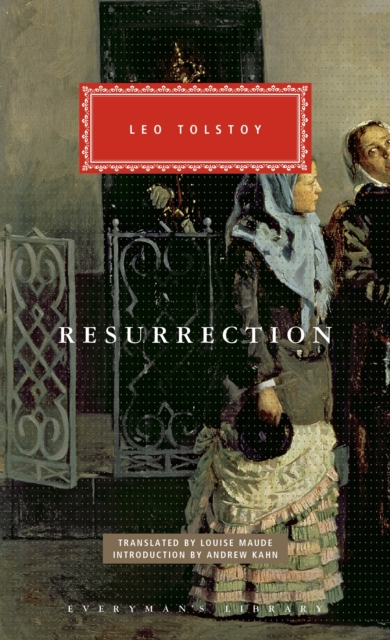
Resurrection
(Author) Leo TolstoyA nobleman faces the consequences of his youthful wrongdoing when the girl he seduced and abandoned some years earlier is put on trial in a murder case. Initially conceived as a love story, Tolstoy's last novel, published in 1899, is a dark masterpiece in which the whole of Imperial Russian society is tried and found wanting. Resurrection moves from the salons and country estates of the aristocracy to courtrooms and government offices, brothels and prisons; from Moscow and St Petersburg by road, rail and route march to the penal settlements of Siberia. Its pages are peopled with convicts and gaolers, revolutionaries and religious sectaries, soldiers, labourers and lawyers, peasants, priests and prostitutes. While for Prince Nekhlyudov and Katusha Maslova salvation through love proves problematic, the journey into exile becomes one of self-discovery and spiritual transformation.
Leo Tolstoy
Leo Tolstoy was a Russian novelist and philosopher, born on September 9, 1828. He is best known for his epic novels "War and Peace" and "Anna Karenina," which are considered masterpieces of realist fiction. Tolstoy's writing style is characterized by his detailed descriptions of everyday life and his exploration of moral and philosophical themes. He is credited with influencing the development of modern literature through his innovative narrative techniques and profound insights into human nature. Tolstoy's works have had a lasting impact on the literary world, inspiring generations of writers and thinkers. His most famous work, "War and Peace," is widely regarded as one of the greatest novels ever written. Tolstoy died on November 20, 1910, leaving behind a legacy of literary brilliance and philosophical wisdom.
Other related