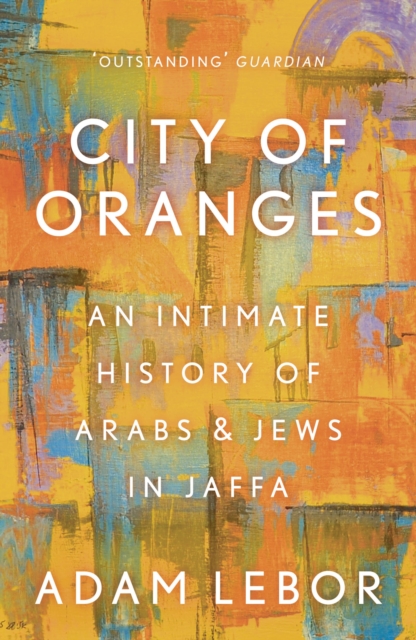
City of Oranges
(Author) Adam LeBorThe ancient port of Jaffa, now part of Tel Aviv, was once known as the 'Bride of Palestine'. It was one of the great cosmopolitan cities of the Mediterranean. Once the centre of Palestinian modernity, Jaffa was the country's cultural and political capital. There Muslims, Jews, and Christians lived, worked, and celebrated together. It was commonplace for the Arabs of Jaffa to attend a wedding at the house of the Jewish Chelouche family and even after 1948 Jews and Arabs gathered at the Jewish-owned spice shop Tiv and the Arab Abulafia family's twenty-four-hour bakery. Through intimate personal interviews and memoirs, letters, and diaries, Adam LeBor gives us a crucial insight into the human lives behind the apparently intractable story of national conflict and a vivid narrative of cataclysmic change. LeBor deftly weaves the personal story of six families, three Jewish and three Arab, into a rich and complex history of Israel and Palestine in the twentieth century. In a special updated afterword, LeBor returns to Jaffa after ten years to find a city greatly changed by gentrification, demolition and waves of new incomers. Rising prices have scattered communities. The exodus of Jaffa's Arabs continues. But with all the changes, the desire for integration endures. LeBor's magnificent history is a story of hope found in the memories of the Levant's once dazzling mosaic of cultures and communities.
Adam LeBor
Adam LeBor is a British journalist, author, and literary critic known for his insightful works on politics, history, and international affairs. His writing style is characterized by meticulous research, engaging storytelling, and a keen eye for detail. LeBor's most notable works include "City of Oranges: Arabs and Jews in Jaffa," a critically acclaimed book that explores the complex history and coexistence of Arabs and Jews in the ancient port city of Jaffa. This book showcases LeBor's ability to delve into intricate geopolitical issues and human stories with nuance and empathy. LeBor's contributions to literature lie in his ability to shed light on lesser-known aspects of history and society, challenging readers to question their assumptions and deepen their understanding of the world.
Other related
The Last Days of Budapest
Spies, Nazis, Rescuers and Resistance, 1940–1945

Hitler's Secret Bankers
How Switzerland Profited from Nazi Genocide



Original Sin
President Biden's decline, its cover-up, and his disastrous choice to run again