Call Me Ishmaelle
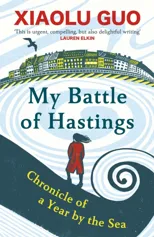
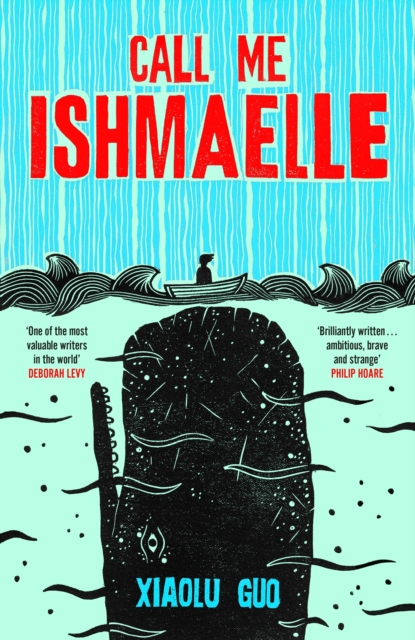
(Author) Xiaolu GuoI must work on a ship as a man... Yes, I must seek a new life, more adventurous than that of my fellows on this desolate salt marsh. I must find freedom on the seas. 1843. Ishmaelle is born in a small village on the stormy Kent coast where she grows up swimming with dolphins. After her parents and infant sister die, her brother, Joseph, leaves to find work as a sailor. Abandoned and desperate for a life at sea, Ishmaelle disguises herself as a cabin boy and travels to New York. Call Me Ishmaelle reimagines the epic battle between man and nature in Herman Melville's Moby Dick from a female perspective. As the American Civil War breaks out in 1861, Ishmaelle boards the Nimrod, a whaling ship led by the obsessive Captain Seneca, a Black free man of heroic stature who is haunted by a tragic past. Here, she finds protectors in Polynesian harpooner, Kauri, and Taoist monk, Muzi, whose readings of the I-Ching guide their quest. Through the bloody male violence of whaling, and the unveiling of her feminine identity, Ishmaelle realises there is a mysterious bond between herself and the mythical white whale, Moby Dick. Xiaolu Guo has crafted a dramatically different, feminist narrative that stands alongside the original while offering a powerful exploration of nature, gender and human purpose.
Xiaolu Guo
Xiaolu Guo is a Chinese novelist and filmmaker best known for her novel "A Concise Chinese-English Dictionary for Lovers." Her writing style is characterized by its raw, introspective exploration of identity, migration, and cultural clashes. Guo's work sheds light on the complexities of modern China and the immigrant experience.
Other related