On the Move
A Life
(Author) Oliver SacksWhen Oliver Sacks was twelve years old, a perceptive schoolmaster wrote in his report: 'Sacks will go far, if he does not go too far'. It is now abundantly clear that Sacks has never stopped going . . . From its opening pages on his youthful obsession with motorcycles and speed, On the Move is infused with his restless energy. As he recounts his experiences as a young neurologist in the early 1960s, first in California and then in New York, where he discovered a long-forgotten illness in the back wards of a chronic hospital, as well as with a group of patients who would define his life, it becomes clear that Sacks's earnest desire for engagement has occasioned unexpected encounters and travels - sending him through bars and alleys, over oceans, and across continents. With unbridled honesty and humour, Sacks shows us that the same energy that drives his physical passions -bodybuilding, weightlifting, and swimming - also drives his cerebral passions. He writes about his love affairs, both romantic and intellectual, his guilt over leaving his family to come to America, his bond with his schizophrenic brother, and the writers and scientists - Thom Gunn, A. R. Luria, W. H. Auden, Gerald M. Edelman, Francis Crick - who influenced him. On the Move is the story of a brilliantly unconventional physician and writer - and of the man who has illuminated the many ways that the brain makes us human.
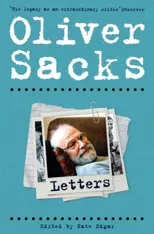
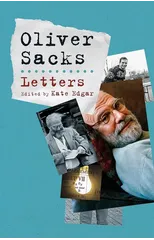
Oliver Sacks
Oliver Sacks (1933-2015) was a British-American neurologist and author known for his compassionate and insightful writings on the human brain and the mysteries of the mind. His most notable works include "The Man Who Mistook His Wife for a Hat" and "Awakenings," which inspired the Oscar-nominated film starring Robin Williams and Robert De Niro. Sacks' literary style was characterized by a blend of scientific rigor and poetic storytelling, making complex neurological concepts accessible to a wide audience. His contributions to literature include shedding light on the experiences of individuals with neurological disorders and challenging societal perceptions of what it means to be human. Oliver Sacks remains a prominent figure in the genre of medical narrative and his work continues to inspire readers and researchers alike.
Other related