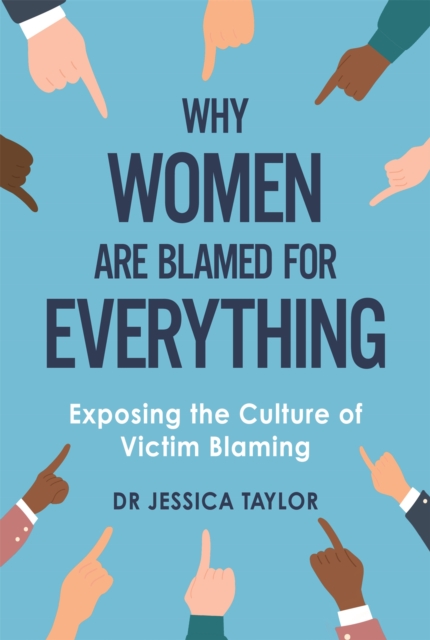
Why Women Are Blamed For Everything
Exposing the Culture of Victim-Blaming
(Author) Dr Jessica TaylorShe asked for it. She was flirting. She was drinking. She was wearing a revealing dress. She was too confident. She walked home alone. She stayed in that relationship. She was naïve. She didn't report soon enough. She didn't fight back. She wanted it. She lied about it. She comes from a bad area. She was vulnerable. She should have known. She should have seen it coming. She should have protected herself. The victim blaming of women is prevalent and normalised in society both in the UK, and around the world. What is it that causes us to blame women who have been abused, raped, trafficked, assaulted or harassed by men? Why are we uncomfortable with placing all of the blame on the perpetrators for their crimes against women and girls? Based on three years of doctoral research and ten years of practice with women and girls, Dr Jessica Taylor explores the many reasons we blame women for male violence committed against them. Written in her unique style and backed up by decades of evidence, this book exposes the powerful forces in society and individual psychology which compel us to blame women subjected to male violence.
Dr Jessica Taylor
Dr. Jessica Taylor is a renowned psychologist, author, and speaker known for her groundbreaking work in the field of trauma and abuse. She is the author of several influential books, including "Why Women are Blamed for Everything" and "The Psychology of Victim-Blaming." Dr. Taylor's writing style is known for its clarity, empathy, and commitment to challenging societal norms that perpetuate harm and injustice. Her work has had a profound impact on the way we understand and respond to trauma, particularly in the context of gender-based violence. Dr. Taylor's most famous work, "Why Women are Blamed for Everything," has been widely acclaimed for its powerful insights and compelling arguments. She continues to be a leading voice in the fight against victim-blaming and abuse, and her contributions to literature and psychology have been instrumental in advancing our understanding of these critical issues.
Other related