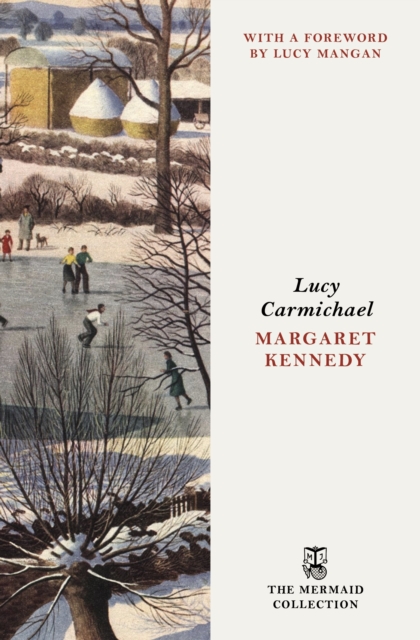
Lucy Carmichael
(Author) Margaret KennedyThe Mermaid Collection Originally published in 1951 from the author of beloved holiday classic The Feast comes a glorious coming-of-age tale about a heroine whose wedding day does not go entirely to plan . . . With a foreword by Lucy Mangan *** 'People seem to get over things, don't they? I don't know how, but they do - ordinary people. I'm very ordinary, so I expect I shall do what they do.' Lucy Carmichael is jilted at the altar. But no matter. Her loving and kind family never liked her explorer fiancé anyway. Instead of moping or falling into her supportive family's arms, however, Lucy abandons their suburban home. Heading for the country, she takes up a teaching position in the industrial town of Ravonsbridge. There, she finds solace in her work, in her new (rather gossipy) colleagues - and rediscovers her sensible young self. But if Lucy has, despite everything, kept her head - where lies her heart? Praise for Margaret Kennedy: 'She is not only a romantic but an anarchist, and she knows the ways of men and women very well indeed' Anita Brookner 'Kennedy was immensely popular in her heyday' Washington Post 'Margaret Kennedy's poised style, cool wit and skilful characterization kept her novels welcome for three decades' Cambridge Guide to Literature in English
Margaret Kennedy
Margaret Kennedy (1896-1967) was a British novelist and playwright known for her insightful characterizations and sharp wit. She wrote over a dozen novels, with her most famous work being "The Constant Nymph" (1924), which was adapted into a successful play and film. Kennedy's writing style was characterized by its keen observations of human nature, intricate plotting, and subtle humor. She was a prominent figure in the interwar literary scene and made significant contributions to the portrayal of complex relationships and social dynamics in her works. Kennedy's impact on literature can be seen in her ability to capture the complexities of human emotions and relationships with nuance and depth.
Other related
Kin
The spellbinding new novel from the Women’s Prize-winning author of An American Marriage