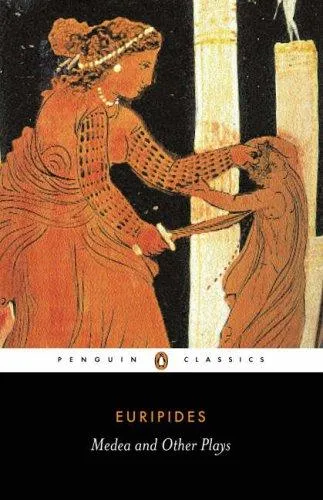
Medea
(Author) Euripides"A Student Edition of Euripides' play with commentary by Will Shuler, which looks at its portrayal of violence - both onstage and off; the original performance conditions; staging challenges, both then and now (including Medea's exit on a dragon); the notion of myth and how Greek tragedians were telling old stories to get new meanings; and how the play has evolved through translation. It considers a range of productions around the world up to the present day in order to see how different translators and playwrights have adapted the material, and how actors and directors have approached it"-- Provided by publisher.
Euripides
Euripides was an ancient Greek tragedian born around 480 BC in Athens. He is known for his innovative and controversial plays that challenged traditional beliefs and societal norms. Some of his most notable works include "Medea," "The Bacchae," and "Electra."
Euripides' plays often featured strong female characters and explored themes of revenge, betrayal, and the complexities of human nature. His use of psychological depth and moral ambiguity set him apart from his contemporaries and influenced future playwrights.
Euripides made significant contributions to the development of Greek tragedy, incorporating elements of realism and focusing on the inner lives of his characters. His works continue to be studied and performed around the world, with "Medea" being his most famous and enduring play. Euripides' legacy as a master of tragedy and a pioneer of dramatic storytelling has had a lasting impact on the literary genre.
Other related