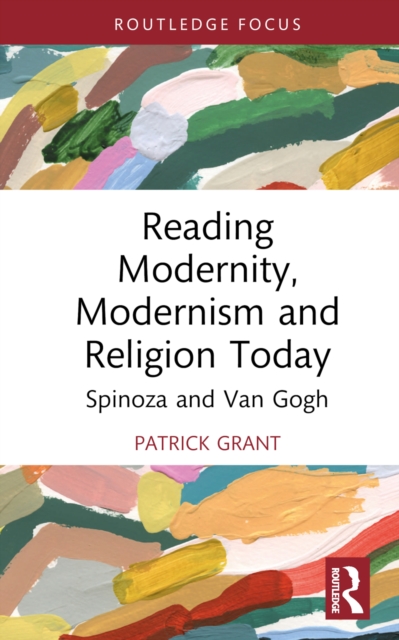
Reading Modernity, Modernism and Religion Today
Spinoza and Van Gogh
(Author) Patrick Grant"Feelings of rootlessness, fragmentation and loneliness are endemic in today's secular societies. In the late nineteenth century, Emile Durkheim described this kind of social malaise as anomie, a concept which this book locates within a historical narrative of the emergence of Modernism from Modernity. The book focuses on two representative figures, Benedictus de Spinoza and Vincent van Gogh, on whose work it offers some significant new perspectives. Spinoza drew up a blueprint for Modernity, which is to say, the cultural transformations that took place as a result of the Scientific Revolution and the Protestant Reformation. In counterpoint to his overriding confidence in reason, a persistent current in Spinoza's writing shows how concerned he was about a possible loss of confidence in his governing idea of a single Substance, the philosophical God with which he sought to replace the creator God of the Bible. In promoting art as a means of filling the gap left by the absence of Spinoza's philosophical God and the failures of traditional Christianity, Van Gogh also discovered the limitations of the vocation to which he had dedicated himself"--
Patrick Grant
Patrick Grant is a renowned Scottish writer known for his novel "Laidlaw," which introduced the gritty detective Jack Laidlaw. Grant's writing style is characterized by its sharp dialogue and vivid descriptions of Glasgow's underworld. His work explores themes of justice, morality, and the complexities of human nature.
Other related
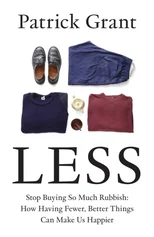
Less
Stop Buying So Much Rubbish: How Having Fewer, Better Things Can Make Us Happier

A Straightforward Guide to Getting the Best Out of Your Retirement
Maximising The Benefits of Your Retirement Years - Revised Edition 2025
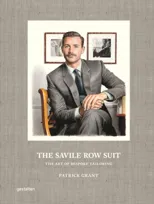
The Savile Row Suit
The Art of Hand Tailoring on Savile Row by Patrick Grant