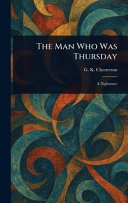
The Man Who Was Thursday
(Author) G K Chesterton"The Man Who Was Thursday: A Nightmare" by G. K. Chesterton is a thrilling and surreal allegory that plunges into a world of secret identities and hidden agendas. This classic work of fiction blends elements of mystery, satire, and religious themes, creating a truly unique reading experience. At its heart a tale of police and anarchists, the story unfolds as a metaphysical nightmare, questioning the nature of good and evil. Chesterton masterfully crafts a narrative where reality is constantly shifting, and the characters grapple with their own beliefs and the very fabric of existence. This meticulously prepared print edition preserves the timeless quality of Chesterton's prose and the enduring appeal of his allegorical vision. "The Man Who Was Thursday" remains a thought-provoking and captivating exploration of faith, doubt, and the search for meaning in a chaotic world. Perfect for readers who appreciate classic literature and stories that challenge perceptions. This work has been selected by scholars as being culturally important, and is part of the knowledge base of civilization as we know it. This work is in the public domain in the United States of America, and possibly other nations. Within the United States, you may freely copy and distribute this work, as no entity (individual or corporate) has a copyright on the body of the work. Scholars believe, and we concur, that this work is important enough to be preserved, reproduced, and made generally available to the public. We appreciate your support of the preservation process, and thank you for being an important part of keeping this knowledge alive and relevant.
G K Chesterton
G.K. Chesterton (1874-1936) was an English writer, poet, and philosopher known for his wit, humor, and keen intelligence. He is best known for his detective fiction featuring the iconic character Father Brown, as well as his essays and novels exploring themes of religion, social criticism, and metaphysics. Chesterton's works often convey his deep Catholic faith and his belief in the importance of tradition and morality in society. His literary style is characterized by his use of paradox, satire, and clever wordplay. Chesterton's impact on the mystery genre is significant, with many considering him a pioneer of the modern detective story. His most famous work is "The Man Who Was Thursday," a novel that combines elements of mystery, thriller, and allegory. Chesterton's contributions to literature continue to be celebrated for their insight, humor, and timeless relevance.
Other related


What the Night Brings
The most shocking, gripping Tom Thorne thriller yet