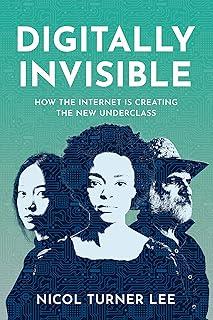
Digitally Invisible
How the Internet Is Creating the New Underclass
(Author) Nicol Turner LeeReal-life consequences of the digital divide, and what can be done to close it More than one-half of the world's 7.7 billion people still do not have access to the Internet, including millions of people in the United States, which has led the digital revolution. Most of these non-adopters--whether by choice or circumstance--are poor, less educated, people of color, older, or living in rural communities. As the digital revolution is quickly carving out this other America, it's likely that these people on the margins of the information-based economy will fall deeper into abject poverty and social and physical isolation. Based on fieldwork across the United States, this book explores the consequences of digital exclusion through the real-life narratives of individuals, communities, and businesses that lack sufficient online access. The inability of these segments of society to exploit the opportunities provided by the Internet is rapidly creating a new type of underclass: the people on the wrong side of a digital divide. The book focuses on the places in America where technology is widening the gaps among social classes, racial and ethnic minorities, and urban and rural communities. The author offers fresh ideas for providing equitable access to existing and emerging technologies. Her ideas potentially can offset the unintended outcomes of increasing automation, the use of big data, and the burgeoning app economy. In the end, she makes the case that remedying digital disparities is in the best interest of U.S. competitiveness in the technology-driven world of today and tomorrow. ple on the wrong side of a digital divide. The book focuses on the places in America where technology is widening the gaps among social classes, racial and ethnic minorities, and urban and rural communities. The author offers fresh ideas for providing equitable access to existing and emerging technologies. Her ideas potentially can offset the unintended outcomes of increasing automation, the use of big data, and the burgeoning app economy. In the end, she makes the case that remedying digital disparities is in the best interest of U.S. competitiveness in the technology-driven world of today and tomorrow. ple on the wrong side of a digital divide. The book focuses on the places in America where technology is widening the gaps among social classes, racial and ethnic minorities, and urban and rural communities. The author offers fresh ideas for providing equitable access to existing and emerging technologies. Her ideas potentially can offset the unintended outcomes of increasing automation, the use of big data, and the burgeoning app economy. In the end, she makes the case that remedying digital disparities is in the best interest of U.S. competitiveness in the technology-driven world of today and tomorrow. ple on the wrong side of a digital divide. The book focuses on the places in America where technology is widening the gaps among social classes, racial and ethnic minorities, and urban and rural communities. The author offers fresh ideas for providing equitable access to existing and emerging technologies. Her ideas potentially can offset the unintended outcomes of increasing automation, the use of big data, and the burgeoning app economy. In the end, she makes the case that remedying digital disparities is in the best interest of U.S. competitiveness in the technology-driven world of today and tomorrow. the use of big data, and the burgeoning app economy. In the end, she makes the case that remedying digital disparities is in the best interest of U.S. competitiveness in the technology-driven world of today and tomorrow.
Nicol Turner Lee
Nicol Turner Lee is a renowned scholar and expert in the field of technology policy and racial equity. She is a Senior Fellow in Governance Studies and the Director of the Center for Technology Innovation at the Brookings Institution. Lee's work focuses on the intersection of technology, race, and public policy, with a particular emphasis on bridging the digital divide and ensuring equitable access to technology for all.
Lee's research and writing have had a significant impact on the field of technology policy, and she is a respected voice on issues related to digital inclusion and equity. One of her most notable works is the book "Digitally Invisible: How the Internet is Creating the New Underclass," in which she explores the ways in which lack of access to technology can perpetuate inequality and disadvantage certain groups in society.
Lee's writing is characterized by its depth of research, clarity of analysis, and commitment to social justice. Her work has been instrumental in shaping public discourse and policy around technology and equity, and she continues to be a leading voice in the field.
Other related
Love Machines
How Artificial Intelligence is Transforming Our Relationships

Nexus
A Brief History of Information Networks from the Stone Age to AI

The Immortalists
The Death of Death and the Race for Eternal Life

If Anyone Builds It, Everyone Dies
The Case Against Superintelligent AI