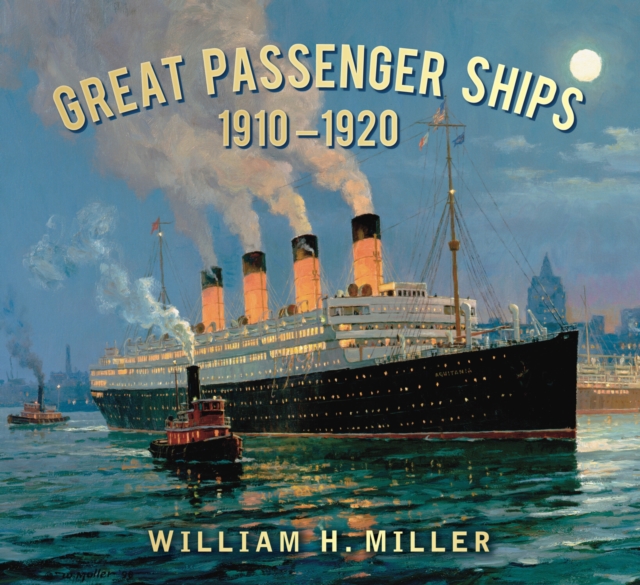
Great Passenger Ships 1910-1920
(Author) William H. Miller"The decade 1910-1920 was truly dramatic. It was an age of evolutuon, when size and speed were almost the ultimate considerations - it was the Industrial Age reaching fir new heights, new dimensions, breaking records. In response ocean liners were becoming bigger, longer, taller and faster. The larger liners were certainly becoming grander - indeed it was the age of the 'floating palace.' It was also an age of increased corporate rivalries as well as political ones. There seemed to be a continuous swing between Imperial Britain and Imperial Germany in the game of 'who could build the bigger ship?' While the German four-stackers of 1897-1906 and then Cunard's brilliant Mauretania and Lusitania of 1907 led the way to larger and more luxurious liners, White Star Line countered by 1911 with the Olympic, her sister Titanic and a near-sister, the Britannic. The French added the France while Cunard took delivery of the beloved Aquitania. But the Germans won out - they produced the 52,000-ton Imperator and a near-sister, the Vaterland, the last word in shipuilding and engineering prior to the First World War. By the war's end mighty firms such as Hamburg America and North German Lloyd had lost just about everything while Cunard, White Star and others had to rebuild, revive and akmost reinvent themselves for the return to peacetime operations in 1919-20. ...--Back cover.
William H. Miller
William H. Miller is best known for his novel "Death of a Salesman," a powerful critique of the American Dream. His writing style is characterized by raw emotion and stark realism. Miller's key contribution to literature lies in his exploration of the human condition and the disillusionment of modern society.
Other related
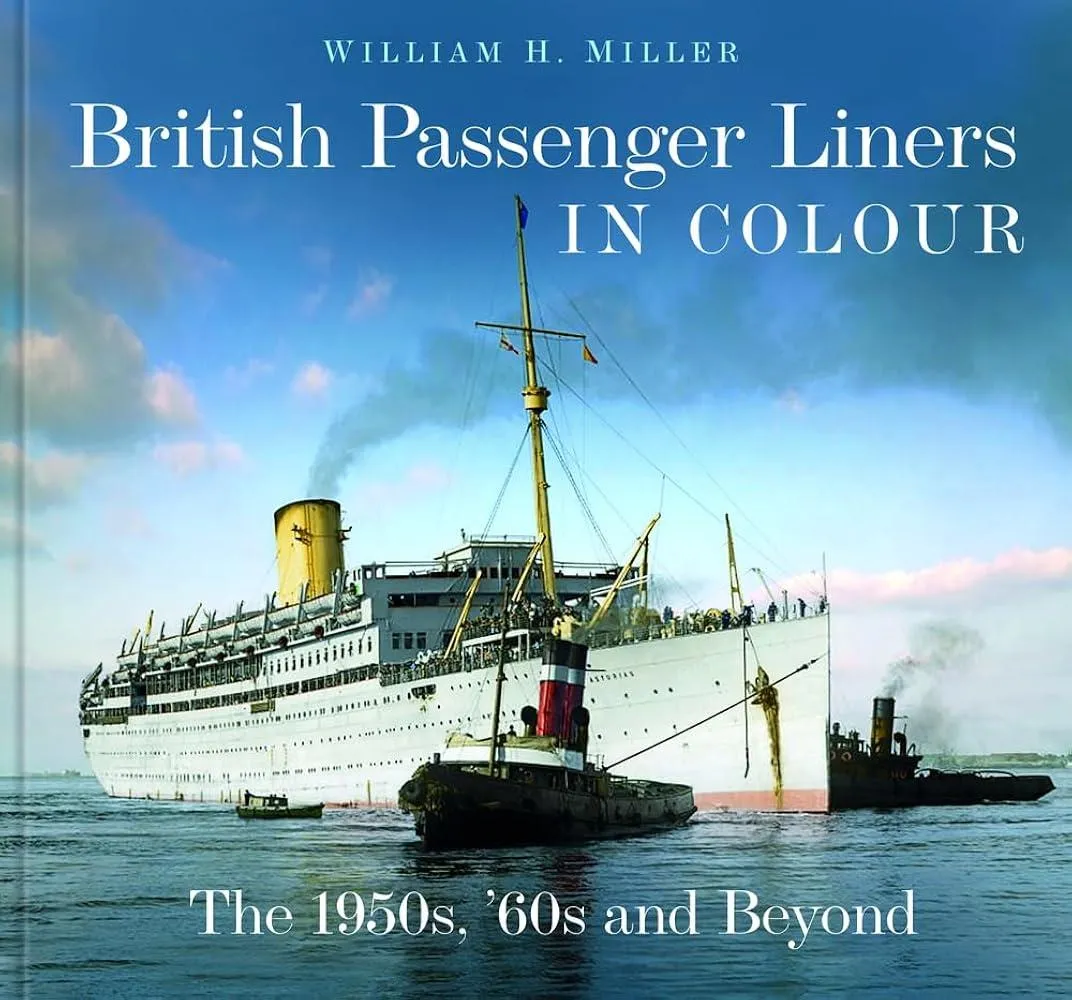
British Passenger Liners in Colour
The 1950s, '60s and Beyond

Last of the Blue Water Liners
Passenger Ships Sailing the Seven Seas