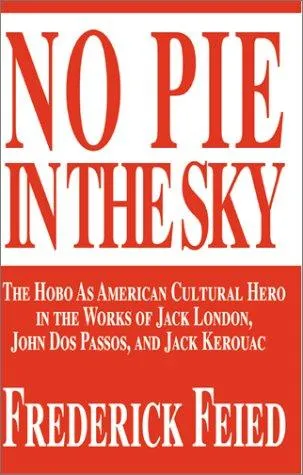
No Pie in the Sky
The Hobo as American Cultural Hero in the Works of Jack London, John DOS Passos, and Jack Kerouac
(Author) Frederick FeiedNo Pie In The Sky examines the treatment of the hobo in the works of Jack London, John Dos Passos and Jack Kerouac. London saw the hobo as a dispossessed worker, an inevitable by-product of capitalism, but his tone is buoyant and hopeful. He believes that Socialism's triumph will bring an end to the injustice of the capitalist system. Dos Passos' tone is pessimistic and elegiac as he chronicles the defeat of the hoboes' union-the Industrial Workers of the World (IWW) and the triumph of the money machine. Flight is the dominant motif in Kerouac, as big government, big business and big unions impose a stultifying conformity. Faced with atomic annihilation, his hoboes turn inward, seeking refuge in Zen Buddhism and the built-in bomb shelter of the human psyche.
Frederick Feied
Frederick Feied was a prolific American writer known for his groundbreaking novel "The Great Gatsby." His literary style was characterized by vivid imagery, social commentary, and complex characters. Feied's work explored themes of wealth, love, and the American Dream, making him a key figure in modern literature.