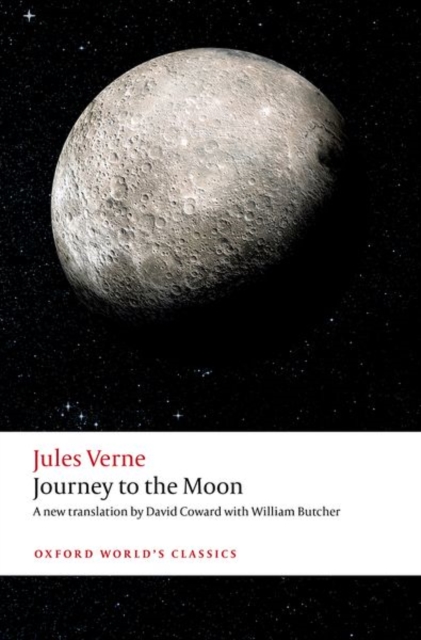
Journey to the Moon
(Author) Jules Verne'How many things dismissed out of hand yesterday turn out to be true tomorrow?' Written in the first half of the career of Jules Verne, the twin volumes of From the Earth to the Moon and Around the Moon tell the daring story of the Journey to the Moon aboard an American projectile blown into the skies by gunpowder. A powerfully innovative tale, it introduces such paradigm revolutions as escape velocity, weightlessness, "slingshot trajectories," and ocean splashdowns. Through its inimitable blend of science, humour, and verbal brilliance, it has fired generations of writers and astronauts into the space age. This new edition, translated, annotated, and presented by David Coward and William Butcher, is the only one to appear as the author wished. It contains a wealth of discoveries, including Verne's sources and ideological and stylistic disagreements with his publisher. ABOUT THE SERIES: For over 100 years Oxford World's Classics has made available the widest range of literature from around the globe. Each affordable volume reflects Oxford's commitment to scholarship, providing the most accurate text plus a wealth of other valuable features, including expert introductions by leading authorities, helpful notes to clarify the text, up-to-date bibliographies for further study, and much more.
Jules Verne
Jules Verne was a French novelist born in 1828 known for his pioneering works in the science fiction genre. His most notable works include "Twenty Thousand Leagues Under the Sea," "Journey to the Center of the Earth," and "Around the World in Eighty Days." Verne's writing style combined scientific knowledge with adventurous storytelling, captivating readers with his vivid imagination and detailed descriptions. He is considered one of the founding fathers of science fiction and his works have had a lasting impact on the genre, inspiring generations of writers and filmmakers. "Twenty Thousand Leagues Under the Sea" is widely regarded as his most famous work, showcasing his talent for blending scientific concepts with thrilling narratives. Verne's contributions to literature continue to be celebrated for their visionary exploration of technology, adventure, and the unknown.
Other related


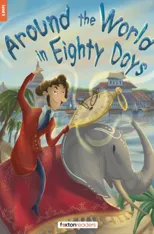
Around the World in Eighty Days - Foxton Reader Level-5 (1700 Headwords B2) with free online AUDIO
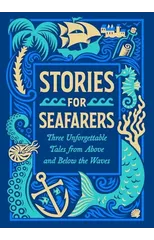
Stories for Seafarers
Three Unforgettable Tales from Above and Below the Waves

Mistakes Were Made
Your favourite small-town romance series is back: spicy, hilarious and romantic, from the author of Things We Never Got Over