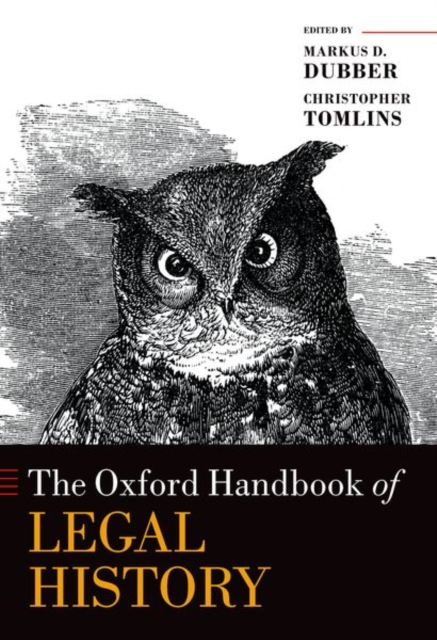
The Oxford Handbook of Legal History
(Author) Markus D. DubberSome of the most exciting and innovative legal scholarship has been driven by historical curiosity. Legal history today comes in a fascinating array of shapes and sizes, from microhistory to global intellectual history. Legal history has expanded beyond traditional parochial boundaries to become increasingly international and comparative in scope and orientation. Drawing on scholarship from around the world, and representing a variety of methodological approaches, areas of expertise, and research agendas, this timely compendium takes stock of legal history and methodology and reflects on the various modes of the historical analysis of law, past, present, and future. Part I explores the relationship between legal history and other disciplinary perspectives including economic, philosophical, comparative, literary, and rhetorical analysis of law. Part II considers various approaches to legal history, including legal history as doctrinal, intellectual, and social history. Part III focuses on the interrelation between legal history and jurisprudence by investigating the role and conception of historical inquiry in various models, schools, and movements of legal thought. Part IV traces the place and pursuit of historical analysis in various legal systems and traditions across time, cultures, and space. Finally, Part V narrows the Handbook's focus to explore several examples of legal history in action, including its use in various legal doctrinal contexts.
Markus D. Dubber
Markus D. Dubber is a renowned legal scholar and author known for his groundbreaking work in criminal law and society. His most famous book, "The Police Power: Patriarchy and the Foundations of American Government," explores the intersection of law, power, and gender. Dubber's writing is characterized by its depth and critical analysis, making him a leading voice in the field of legal literature.