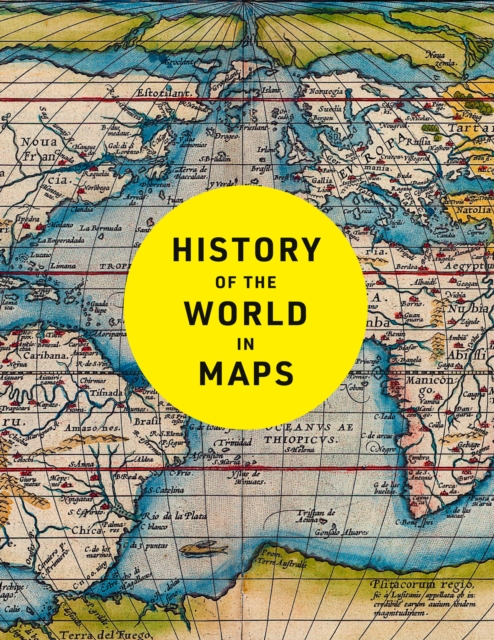
History of the World in Maps
The Ultimate Cartographic Exploration of Our Past
(Author) Philip ParkerFrom Babylonian tablets to Google Maps, the world has evolved rapidly, along with the ways in which we see it. In this time, cartography has not only kept pace with these changes, but has often driven them. In this fully revised and updated edition, over 70 maps give a visual representation of the history of the world. Every map tells a story and this book tells the incredible history of our world through maps, and includes many famous examples of cartography, along with some that deserve to be better known. See countries and cities come and go, empires rise and fall, significant geographical discoveries, and key historical events unfold. Key maps shown include: Babylonian clay tablets, c.2300 BC and c.600 BC - some of the world's oldest surviving maps Hereford Mappa Mundi, c. 1290 - medieval map of the world Aztec City Maps 1524/1541 - precious images of the Aztec capital and their migrations before the Spanish came Waghenaer chart, 1584 - a forerunner to modern nautical charts. Selden Map of China, c. 1620 - Ming map of China and South-east Asia The Scramble for Africa, 1852/1898 - the European powers rush to colonise Africa Booth Poverty Map, 1898 - mapping deprivation in Victorian London Ypres, 1918 - mapping the deaths in one of the First World War's bloodiest battles Cuban Missile Crisis, 1962 - map used by President John F. Kennedy during the crisis COVID map, 2021 - a map of the Global Pandemic
Philip Parker
Philip Parker is a British author known for his expertise in writing non-fiction books across a wide range of subjects. His most notable works include "The World at War," "History of Britain in Maps," and "The Empire Stops Here: A Journey Along the Frontiers of the Roman Empire." Parker's writing style is characterized by thorough research, clear and engaging prose, and a knack for presenting complex information in a digestible format. His contributions to literature include shedding light on historical events and cultures in an accessible and compelling manner. Parker's impact on the non-fiction genre is evident in his ability to educate and entertain readers while maintaining a high standard of scholarship. His most famous work, "The Empire Stops Here," has been praised for its meticulous research and vivid storytelling, solidifying Parker's reputation as a masterful non-fiction writer.
Other related

Land of Mist and Magic
The Myths and Legends that Shaped the British Isles
The History of Everywhere
All the Stuff That You Never Knew Happened at the Same Time
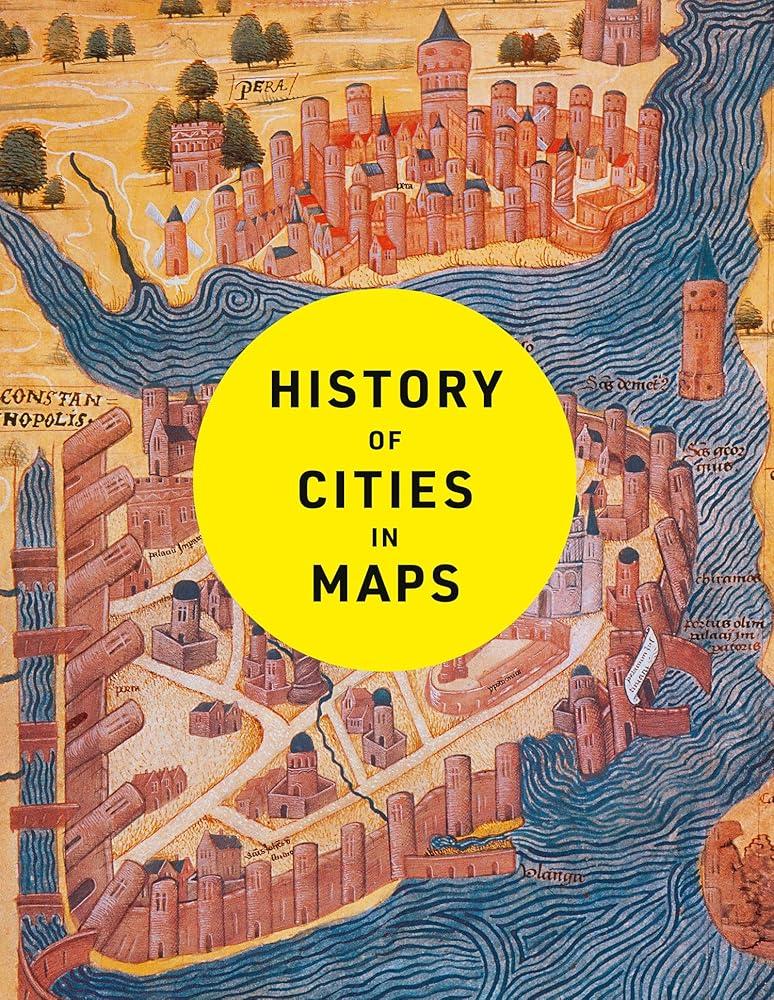
History of Cities in Maps
The Ultimate Visual Exploration of Human Civilisation Through 70 Captivating Historical Maps

Atlas of Atlases
Exploring the most important atlases in history and the cartographers who made them


Saint Petersburg
Sacrifice and Redemption in the City That Defied Hitler