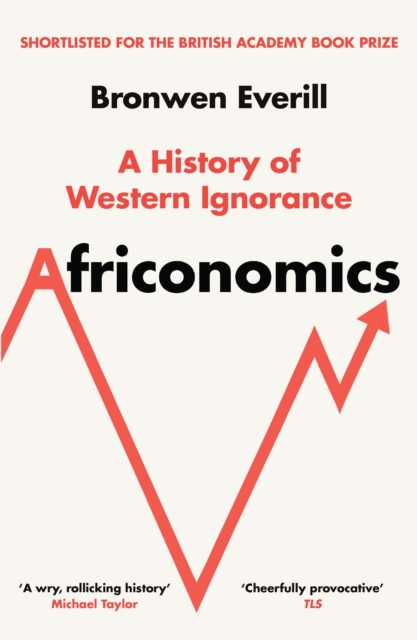
Africonomics
A History of Western Ignorance
(Author) Bronwen Everill'A historically insightful read' Financial Times 'A wry, rollicking, and provocative history' Michael Taylor, author of The Interest 'A thought-provoking analysis of Africa's relationship with economic imperialism' Astrid Madimba and Chinny Ukata, authors of It's A Continent We need to think differently about African economics. For centuries, Westerners have tried to 'fix' African economies. From the abolition of slavery onwards, missionaries, philanthropists, development economists and NGOs have arrived on the continent, full of good intentions and bad ideas. Their experiments have invariably gone awry, to the great surprise of all involved. In this short, bold story of Western economic thought about Africa, historian Bronwen Everill argues that these interventions fail because they start from a misguided premise: that African economies just need to be more like the West. Ignoring Africa's own traditions of economic thought, Europeans and Americans assumed a set of universal economic laws that they thought could be applied anywhere. They enforced specifically Western ideas about growth, wealth, debt, unemployment, inflation, women's work and more, and used Western metrics to find African countries wanting. The West does not know better than African nations how an economy should be run. By laying bare the myths and realities of our tangled economic history, Africonomics moves from Western ignorance to African knowledge. 'Cheerfully provocative ... sparkles with some illuminating moments' TLS
Bronwen Everill
Bronwen Everill is a historian specializing in the Atlantic World and the British Empire during the long eighteenth century. She is known for her meticulous research and engaging writing style, which brings to life the complexities of global interactions and exchanges during this period. Everill's most notable work is "Abolition and Empire in Sierra Leone and Liberia," which explores the intertwined histories of anti-slavery movements and colonial expansion in West Africa. Her contributions to literature include shedding light on underrepresented voices and perspectives in the historical narrative, challenging traditional interpretations of empire and abolition. Everill's work has had a significant impact on the study of Atlantic history and continues to inspire scholars to rethink the legacies of imperialism and slavery.
Other related
What’s Stopping You?
11 Cheatcodes to Unlock the Life You Want


The Other Side of Change
Who We Become When Life Makes Other Plans